Sarah Levine-Miles, LCSW-C, PMH-C, cstfpTherapy for people who are hesitant, but know it’s time for a change.
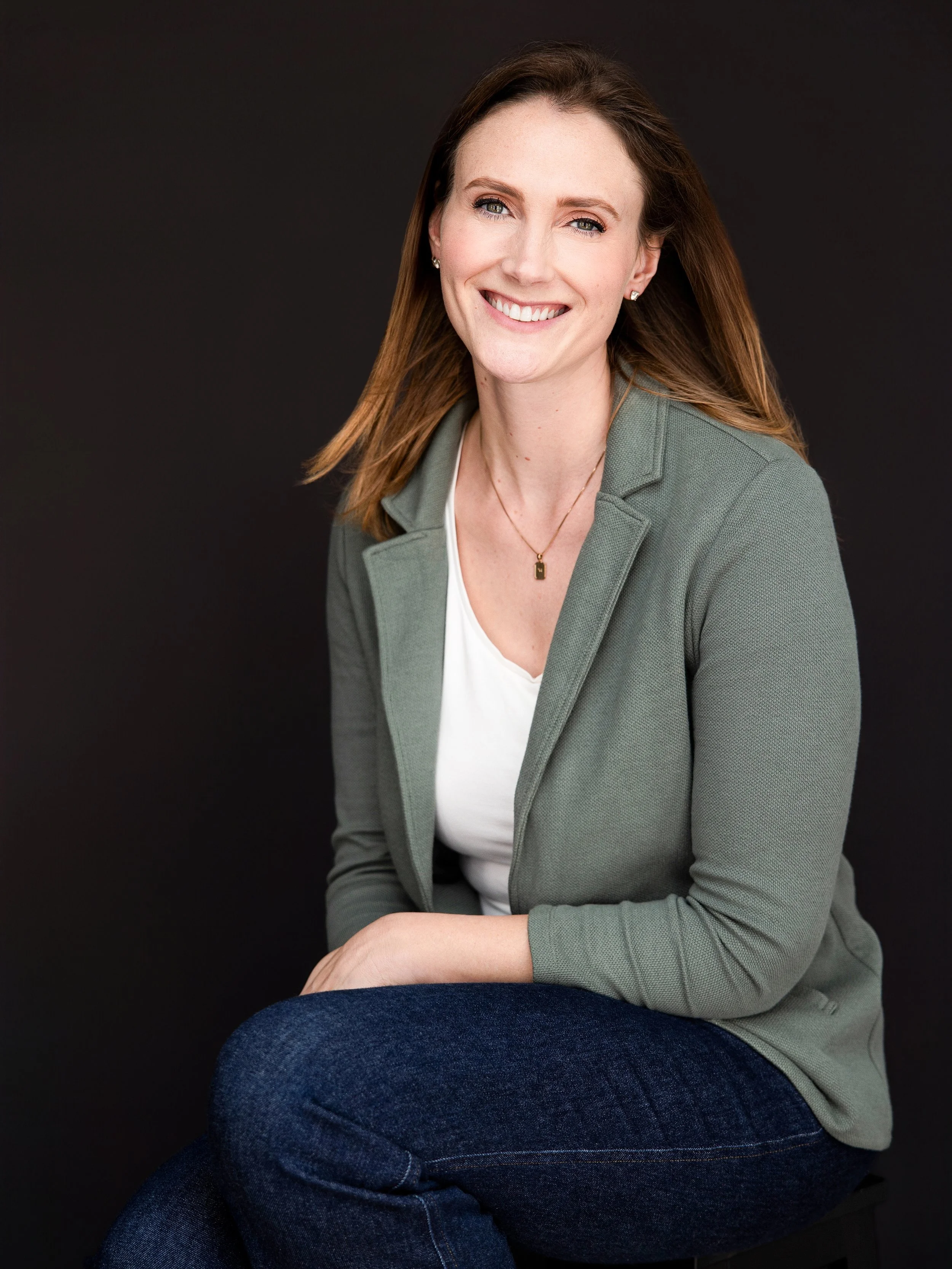
We’ll be straightforward and real—working through what feels messy or overwhelming in a way that helps you feel steadier and more grounded in yourself.

You’re carrying a lot. Way more than people realize.
Being “fine” is exhausting.You get through the day. You take care of things. And it works… until you’re stretched thin and running on fumes.
You’re holding things that no one sees. Responsibilities, emotions, expectations, self-control. And it’s heavy, even if you’ve learned to make it look effortless.
Change happens with connection, not isolation.
-

Individual Therapy
We’ll talk about what’s been taking up space in your mind, and how it’s showing up in your body.
We’ll work at a pace that feels manageable, and focus on what actually helps in your real life- not just in theory.
-

Couples Therapy
For partners who care about each other but keep getting stuck in the same loop : conflict, silence, defensiveness, disconnect, repeat.
We’ll slow the conversations down so you can actually hear each other.

What it’s Like to Work Together
-
![]()
"Incredibly Knowledgeable."
Sarah is incredibly knowledgeable and always committed to learning more so she can show up with the best tools for her clients. She’s also just a genuinely warm, easy-to-talk-to person. I’d trust her with any of my loved ones in a heartbeat.
-Ellie Miller, LCSW-C
-
![Refreshingly Human and Warm]()
"Refreshingly Human and Warm"
Sarah is a thoughtful, collaborative therapist. Her approach is refreshingly human and warm while working in the balance of acceptance and change. She’s an evidence-based therapist who takes seriously the need for clinicians to keep up with emerging research.
-Rebecca Seidemann
-
!["Warm and Passionate"]()
"Warm and Passionate"
She is one of the warmest, most passionate and dedicated people out there. As a fellow therapist, it's pretty easy to get a sense of someone, and It's clear she is genuine and caring and has a perspective that helps people make sense of themselves and their struggles.
-Ben Fogel
-
![The logo of Hugh Jackman with a black background and stylized text.]()
"Responsive and Caring"
Sarah is such a responsive and caring therapist. As a therapist myself, I am consistently impressed by her dedication to her clients and warmth! She is so hard working and consistently making sure she is there for clients.
-Laurie Chaikind McNulty
-
![The word 'Parade' in black text on a white background.]()
"Genuine"
Sarah is one of the most genuine therapists I've met. She cares deeply about her clients and approaches them with compassion and warmth. She is committed to sharing her expertise and personal experience to help clients achieve their goals.
-Emma Schwartz
-
![]()
"Unmatched Compassion"
I have had the pleasure of calling Sarah a trusted colleague for almost 10 years. Her compassion for her clients is unmatched, and she truly meets her clients right where they are and helps them meet their goals in therapy. I truly couldn’t recommend her more; her skill set is unmatched!
-Lauren Feld
-
![]()
"Stays Current in Trainings"
I highly recommend seeking therapy from Sarah. As a professional colleague, I value her perspective highly and have experienced how much she cares about her clients. She has expertise in working with new moms and stays current in training and consultation with this population. I refer clients to her without hesitation.
-Jenny Avila
-
![]()
"Helped me Become the Best Version of Myself."
She helped me become my best version of myself. I'll always be grateful for the work Sarah did with me. Couldn't recommend her more.
-AF

Looking for support for something specific?Some of my clinical specialties
-
A lot of men move through life by pushing through — staying composed, handling things on their own, and keeping feelings private. That works, until it starts to cost something: connection, intimacy, purpose, or even the ability to know what you’re feeling at all. Many of the men I work with describe feeling present on the outside, but numb, tense, or shut down internally.
My work with men focuses on shifting from white-knuckling your way through life to being able to show up in the ways that matter most — in relationships, in work, and in your own internal world. This isn’t about becoming “more emotional.” It’s about having access to yourself again, instead of living cut off from what you want and care about.
In our work, we’ll:
Understand what’s happening emotionally, even when it’s hard to name
Rebuild connection in relationships without feeling overwhelmed or exposed
Strengthen intimacy and communication in ways that feel natural, not forced
Identify where numbness, shutdown, or irritability show up — and why
Move toward goals and values with clarity, rather than pressure or performance
You don’t have to figure this out alone.
Therapy can help you feel more steady, more connected, and more like yourself. -
Support for the parts of you that are changing — seen, held, and understood.
Pregnancy and the postpartum period can open up profound shifts — in identity, nervous system, relationships, and the way you understand yourself. This time can bring joy, fear, grief, rage, anxiety, numbness, and meaning all at once. You don’t have to make any of it make sense alone.
I am certified in Perinatal Mental Health (PMH-C) through Postpartum Support International — the only internationally recognized certification for perinatal mental health. My background also includes training in a Level III NICU and supporting families navigating complicated pregnancies, loss, high-risk medical situations, premature birth, and postpartum hospitalizations.
This means I understand not just the emotional shifts, but the medical, hormonal, attachment, and trauma layers that often go unseen.
We’ll work gently and steadily, helping you:
Understand and regulate your nervous system during a major identity transition
Make sense of intense emotions without shame or self-blame
Repair places where support fell short or trauma occurred
Stay connected to your needs even when others need things from you
This is a space where you get to be held, not just the one who holds everything together.
-
Steadying your emotional rhythms without shutting down what makes you, you.
I work with people who experience shifts in energy, emotion, and intensity — times of feeling deeply inspired and connected, followed by periods that feel heavy, slowed down, or numb.
Bipolar is not just about managing symptoms; it’s about the relationship you have with your own internal rhythms.
Our work focuses on learning your early cues, repairing the shame that often collects around these patterns, and developing structure that supports you without feeling restrictive or flattening.
We move at a nervous system pace, not a checklist.
We learn your early signals, so you don’t feel ambushed by your own mind.
We build routines that feel supportive, not controlling.
And throughout, we protect your sense of identity, vitality, and agency — so you don’t have to choose between being stable and being yourself. -
Support for stepping out of the mental exhaustion of looping thoughts, checking, and constant doubt.
OCD can feel like living inside a loop: intrusive thoughts, mental replaying, reassurance seeking, checking, avoiding, or analyzing just to feel temporarily safe.
Even when you know your thoughts don’t make sense, the discomfort can be so strong it feels impossible not to respond. The more you try to get certainty, the tighter the cycle becomes.
I’m trained in Exposure and Response Prevention (ERP) and Acceptance and Commitment Therapy (ACT) through Massachusetts General Hospital / Harvard Medical School, two of the most effective and research-backed treatments for OCD.
Our work focuses on learning how to relate to your thoughts differently — so your life becomes bigger than the fear, the what-ifs, and the rituals.
This isn’t about forcing yourself to “face your fears” alone.
It’s about creating space, reducing compulsions gradually, and rebuilding trust in your internal signals — at a pace your nervous system can actually tolerate. -
There’s a lot of pressure to have things figured out — your direction, your identity, your relationships, your purpose. On the outside, you may look like you’re managing: you’re doing the work, showing up, handling things. But inside, it might feel confusing, overwhelming, or like you’re falling behind some invisible timeline everyone else seems to know about.
Therapy is a space to slow down enough to understand what’s actually happening — not in an abstract, “who am I?” way, but in a grounded, practical way that helps you make choices that feel aligned with who you are and what you want.
We can work on:
Anxiety, overthinking, and the pressure to get it “right”
Identity, self-esteem, belonging, or questioning where you fit
Relationships, dating, communication, and intimacy
Burnout, perfectionism, and feeling like nothing is ever enough
Transitions: moving, graduating, changing jobs, navigating early career
Feeling numb, unmotivated, or unsure of your direction
This isn’t about having all the answers.
It’s about learning how to listen to yourself, trust yourself, and build a life that feels like yours — not just the one you’re expected to live.

Featured In





Sarah Levine-Miles, lcsw-c, PmH-C, cstfp
Hey! I’m Sarah.
I’m all about helping you build a life that feels rich and meaningful-not just manageable.
I believe in self-compassion, curiosity, and the power of small, steady shifts (with room for a little playfulness along the way).
Together, we’ll create a path that helps you show up as the self you value, even when life feels messy. Ready to explore how we can work together? I’d love to connect!

Sarah Levine-Miles, LCSW-C, PMH-C